
 For a variety of reasons, my attention has recently been directed toward that unique and challenging time of life that used to be called “young adulthood” – about ages 18-25 and sometimes into the late 20’s. The realities of those in this age group have been shifting dramatically for a while, but there’s a marked difference even in the past fifteen to twenty years. Some have taken to calling it “extended adolescence,” hinting at the trend of those of this age group to wait much later in life before taking on what are traditionally considered adult responsibilities – finding a life partner, having children, buying a house, and “settling down” in general. There is less social pressure than in the past to get married immediately after college, and young people are taking extra time to get advanced degrees and travel and get started in their careers before making the more permanent commitments.
I heard an interview a few weeks ago on Marty Moss-Coane’s show Radio Times here in Philadelphia. She was speaking with Jeffrey Jansen Arnett and Hannah Seligson. Jeffrey Arnett is the one who first proposed the label “emerging adulthood” for that period of life from the late teens to the mid-to-late twenties. His theories and thoughts about this age group are fascinating and if you’re interested, I encourage you to check it out! Hannah Seligson is a 30-year-old successful journalist with equally interesting thoughts about this time of life, and she happens to be closer to it in age than Jeffrey Arnett. So it makes for great show.
No matter your feeling about the trends of those formerly known as “young adults,” the fact is that it is during this time period that most aspiring young musicians are really hitting it hard. It is prime working time and when the meat of musical education generally takes place – though it can take place earlier or later for some. Certain instruments lend themselves to intense work at different times. Strings and piano start very early, and the voice can be developed later, for instance. But generally speaking, everyone is working hard between ages 18-25 as they move towards becoming professionals, and for most brass players I know, this was the most intense time of development.
For anyone, no matter the professional aspirations, this time of life is usually full of exploration, excitement, and constant change – all of which lend themselves to questions, disappointment and uncertainty. And for someone wanting to become a professional classical musician, I think that the positive and negative qualities of this time can feel heightened due to several factors: that music involves the whole person – body, mind, emotions, and spirit; it is highly competitive with no guarantees of a steady job in the future; and, last but not least, the final product is a public one that happens in real time. Additionally, these days, the music business is changing quickly and requires – or at least is helped by having – even more skills than ever before. Public speaking, grant writing, and an entrepreneurial know-how, for instance, are coming in more and more handy.
 As an aside, I should say here that if you are thinking of becoming a musician, or are in school for music, and don’t already realize that making it as a professional musician is an all-consuming task, now is a good time to contemplate that fact. I have yet to meet an accomplished classical musician who has not been through a period of many years (usually the majority of their young lives and beyond) of unbelievable focus and hard work. We’re talking about day-in-day-out commitment, regardless of whether it is a weekday or weekend, a normal day or a holiday. It is like training for the Olympics – daily refinement of your skills over a long period of time while also preparing for big events that will help you progress on your desired path. Must this challenging path be angst-filled and joyless for you? I hope not! In fact, if you are angst-filled all the time, something is wrong. (See this great blog post by Cal Newport to read more about this subject). Generally speaking, music will fuel you and give back to you, as will the people and experiences you encounter along the way. However, it is up to you to determine whether you are getting enough back from music to warrant pursuing it as your life’s work.
If you have a strong pull towards another field, or feel more fulfilled in your contributions to something else, then all of that should be taken into consideration as you contemplate what it is that you really want to do. There is no glory in doing something that isn’t going to be a right fit for you or is not going to give you what you need. Music is for everyone, and you don’t have to be making your living performing it in order for it to be a significant and meaningful part of your life.
But let’s assume for now that you are aware of all of this, have made your decision, and are in it for the long haul. You’re going to go for it and give it your all. In fact, you can’t imagine NOT being a musician or at least giving it your best shot. Wonderful! I believe that if you truly dive into something, it will never be time or energy wasted, even if you end up changing directions later in life.
So, you set out on your path, and you go to a university or college with a great music department or perhaps a conservatory. It’s exciting to be immersed in music, finally able to give the majority of your attention to music, but the challenges are immense. You are playing more hours a day than you ever thought possible between your ensembles and personal practice. As you are ready, you might be (and should be if at all possible!) taking festival auditions or participating in competitions and other events in addition to your school activities. So the sheer physical demand is heavy, to say nothing of any personal drama that might be going on as you adjust to being your own boss (more or less), making your own decisions, and confronting questions and situations you have never faced before. There is, in a nutshell, a lot going on in your life.
If you are working hard and putting yourself out there, in addition to the thrill of all that is new and exciting, you are undoubtedly also encountering times of disappointment, disillusionment, and exhaustion. There are be performances and auditions that don’t go as you would have hoped. You might even feel like some of them are grand failures.
So, how do you make sure that this time is spent moving towards musical maturity rather than simply extending adolescence? And how do you avoid getting caught in distractions and downward spirals that will undermine you?
I’ll try to offer a few ideas.
First of all, remember what the goal is: to become a consummate artist and the musical equivalent of an elite athlete. You want to be the very best you can be.
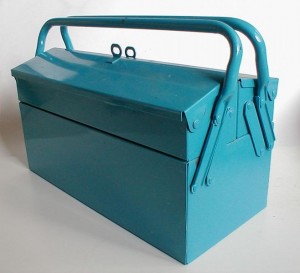 What are elements that can lead to the goal? Enter the TOOLBOX. This time of life, in my opinion, is about using the intensity of it, your access to resources, and the ample playing and practice time to stock your toolbox with materials that will aid you on your journey, not only through your emerging adulthood, but beyond into your life and your career. You want your toolbox to be stocked full of resources, inspiration, and the tried and true tools of your trade. You will be able to add to it, of course, but now is prime stocking time!
Tool #1: GREAT HABITS. Your first priority as you start this journey should be to establish those habits that will encourage the growth, health, and longevity of your career. What does this mean? I think it means you really want to get to know yourself. And in my opinion, having a daily routine is one of the greatest ways to get to know yourself and your playing. This should be a deliberate and conscious process of getting the muscles warm and daily cared for, and for touching on all of the basics that you need as a horn player. To have a routine is not to say you can’t shake it up or expand as you grow or as your needs change, but it will allow you to learn the nuts and bolts of your own technique and needs. You can use it as a touchstone every day, both now and in your career, so that you’re daily paying attention, knowing what feels right and works best for you, knowing what you need to do to play well that day and be prepared for what’s coming up. A daily warm-up and routine in my opinion is an invaluable tool!
Tool #2: EFFICIENCY and the RIGHT KIND OF WORK. Learn how to learn. Learn how to focus. Learn how to prepare and be efficient in your preparation. The more effectively you can do this, the less you’ll beat your head up against the practice room wall. Read books like The Inner Game of Tennis or Soprano on Her Head or Thinking Body, Dancing Mind. I also really like Stephen Covey’s Seven Habits of Highly Effective People. These are all books with very helpful suggestions on how to learn, think, and practice, and how to do the best kind of work.
Tool #3: GATHER RESOURCES THAT HELP YOU WITH YOUR WEAK LINKS. You’re only as strong as your weakest link! So, for instance, when the demands placed on you are great, there is no better time to learn about stress and your response to it. When going out on stage is not settling so well with you (or is downright striking fear in your heart!) there is no better time to learn about fear and your response to it. When you’ve had a hard time of it, with a string of not-so-great performances, there is no better time to learn about resilience, bouncing back, and persistence! Responding to stress and fear are things that we can learn how to do better. Two of my very favorite resources geared towards these topics are books that were recommended to me along the way as I was stocking my own toolbox in school: The New Toughness Training for Sports by James E. Loehr and Feel the Fear and Do it Anyway by Susan Jeffers. Contrary to what you may gather from the titles, these are not about becoming a calloused, tough jock, but rather about being resilient and knowing how to think, act, and re-act in various circumstances, and getting in the habit of responding to those perceived high-pressure situations in certain ways. Musician or not, anyone striving to be truly elite and excellent in their given field will find something helpful in these books.
Tool #4: GET TO KNOW THE WIDER MUSIC WORLD. Look for opportunities to put yourself out there and be involved, not only within your school, but outside of it. Subscribe to your instrument’s society and publication. For us horn players, it is the Horn Call from the International Horn Society. Go to your music library and read the music magazines and publications to see what’s going on in the music world these days. One of the best resources I know of for young emerging professional musicians is New England Conservatory’s Entrepreneurial Musicianship Department. They have a wealth of information and resources compiled that you will definitely want as part of your toolbox!
Tools #5 and #6: EXPOSURE and EXPLORATION, both of which are related to Tool #4. By exposure, I mean exposing your ears to great music and musicians, great live concerts, and great recordings. Absorb everything you can. If something is beautiful to you, what made it beautiful? Can you replicate it? So look outside of yourself, find people that inspire you and see what you can learn from them. Read biographies of great musicians. Just knowing about some of their paths, challenges, and attitudes can be invaluable.
Exploration of and exposure to the larger music world will not only give you relevant information about events and trends, they will give you “dream” material and inspiration that can start ideas percolating about how you would most like to use your talents. Perhaps you even have another skill or passion aside from music that could be combined with music. The possibilities are endless, as you’ll see if you look at some of the resources I mentioned. Could you see yourself going to Europe on a Fulbright to study? If so, you should you start taking your language classes now! And you should see if there’s a way to meet the teacher you would like to study with while there. You’ll need their support. Are you drawn to the world of chamber music? If so, find some festivals you can apply for that might allow you to be immersed in that world. Is being in an orchestra your dream job? Find out what those who are getting jobs now did when they were your age. Where did they go for school and during their summers? Who did they study with? Are you wild about new music? Have fun learning extended techniques! (You’ll have to do this anyway as a professional classical musician, so you might as well enjoy it.) Think early music is the greatest? Find a natural horn workshop.
One of my favorite approaches to exploration is by starting what I call a “string.” Find something that is compelling to you and follow it. See where it leads. Sometimes you have experiences or meet people that will introduce you to another string of thought or interest, or deepen your interest in the current string. As the writer and columnist Franklin P. Adams said, “I find that a great part of the information I have was acquired by looking up something and finding something else on the way.” And this is one of the greatest luxuries of this time of life. That is not to say you won’t be able to do this later, but it will never be easier than it is now.
I would love to hear from any readers who would like to share their favorite toolbox items with me and other readers. Favorite books? Favorite resources? Anything that has been especially of help to you would be of great interest, so please feel free to comment!
Happy Toolbox Stocking!
Books for Further Reading:
W. Timothy Gallwey, The Inner Game of Tennis
Eloise Ristad, Soprano on Her Head
Chungliang Al Huang and Jerry Lynch, Thinking Body, Dancing Mind
James E. Loehr, The New Toughness Training for Sports
Susan Jeffers, Ph.D., Feel the Fear and Do It Anyway
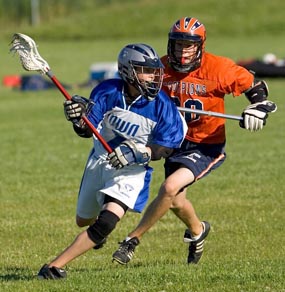 Lesson number one came over the summer when the subject of lacrosse had come up. I had seen a bumper sticker with LAX on it, wondering why anyone would be touting the glories of the Los Angeles Airport when I was made aware that it was an abbreviation for lacrosse. I soon had my eyes opened to a whole culture! A lax bro, I learned, is a guy who plays, or perhaps more accurately, lives and breathes lacrosse. In addition to having a whole sub-culture of their own, they also have their own colloquialisms that can vary from region to region. A lax bro in Maryland may use different phraseology than a lax bro in Pennsylvania or New York. And the terms are constantly changing.
 I was recently reminded of the famous Karl Marx quote: “Religion is the opiate of the people.” It is generally interpreted to mean (at best) that religion is – for those who really can’t handle life on their own – a refuge, a place of escape, somewhere to go to shut out the confusion. At worst, it is interpreted to mean that it is an illusionary/delusionary tool used for dumbing-down, manipulating, and controlling populations. I promise that this post is actually about music and not religion so bear with me!
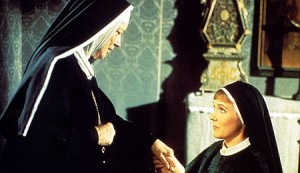 Back to The Sound of Music and Mother Abbess. Do you remember how she called Maria in to see her? She said something to the effect of, “Maria, these walls are not meant for escape. You must face your life!” She was not going to let Maria use her convent as a place to hide. Maria had confusing and overwhelming emotions she must confront. Life had become somewhat messy. And as we learn in the song that Mother Abbess will soon launch into (inevitable in a Rodgers and Hammerstein musical!), Maria had mountains to climb, streams to ford, dreams to find that would require all the love that she could give. It was not going to be an easy life. It would require courage, perseverance, generosity, self-sacrifice, and great strength, and no doubt she would make mistakes, but the journey would be a fulfilling one.
 The next four days were going to be a mad dash to the finish. We had one afternoon to explore Cologne. If there is one place one must go when visiting Cologne, it is the cathedral whose gothic spires dominate the city.
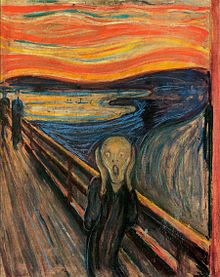 “That’s right,” I added. “Take Edvard Munch’s The Scream, for instance. It doesn’t give you a warm and fuzzy feeling exactly. But it isn’t supposed to. You’re supposed to be able to see and feel a scream.”
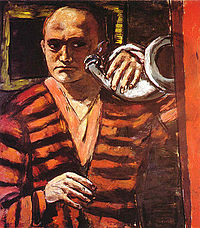 “Look at what I found!” he exclaimed. “It’s a painting of Max Beckman and – me!”
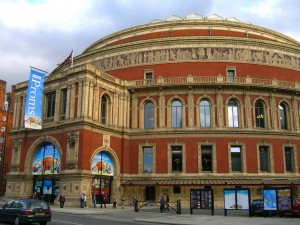 After a short rest, we were off to Royal Albert Hall, the location of the Proms. The Proms are what you might call a Big Deal and definitely a Scene. The feel of these concerts which last over several weeks throughout each summer is more like a rock concert than a typical classical concert. The way you get a ticket for the Proms is the exact opposite of what you would do to get a ticket for, say, the Vienna Opera Ball. Tickets for seats are chosen by lottery, and Prommers, as they are called, line up for hours in advance for the opportunity of buying a standing room seat. Now, the most interesting part is that standing room tickets, rather than being in the back, or way at the tippy-top, are right up front on the ground floor. It is a large space that can hold around a thousand standing concert-goers! Because of all of this, the Proms has been called the most democratic of music festivals. Every one gets a fair chance at attending – you just may have to show how much you want it by your time commitment and your perseverance!
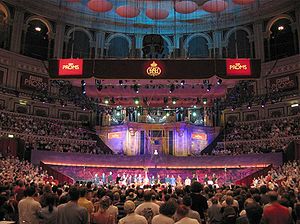 The last night of the Proms is televised by the BBC and is full of tradition. British flags are waved and the mood is celebratory.
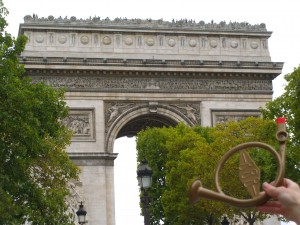 “I’ll come back one day to see and learn more,” he said as he struck a pose in front of that giant monument. “You don’t regret bringing me along, do you?” he said, already knowing the answer.
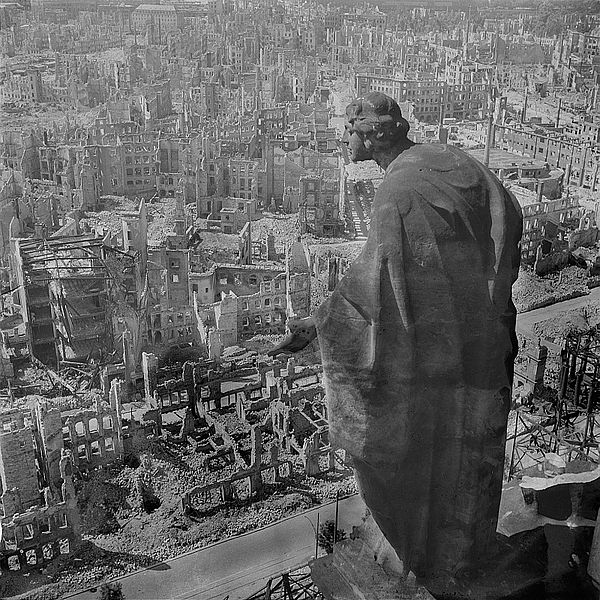 Once we settled into our room, we read up a bit on the history of the hotel and discovered that where we were staying, the Taschenbergpalais, had been the Wermacht headquarters in Dresden! We also found a photo of what Dresden looked like after it was bombed.
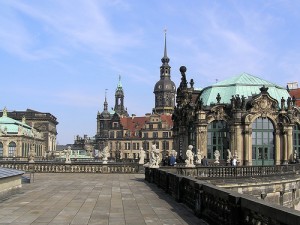 We only had a few short hours that afternoon, so out we went for a walk. We walked across the street to the Zwinger, a baroque palace, and through the center of the city to the Frauenkirche, then to the river.
 The next day we flew to Frankfurt, the major financial center of Europe. Just so one doesn’t forget, a very large statue of the Euro sign has a prominent place in town.
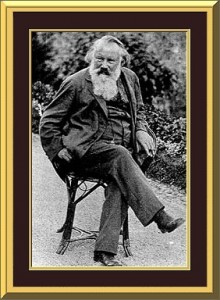 “The man behind us looks remarkably like Johannes Brahms!” whispered Corzoo to me.
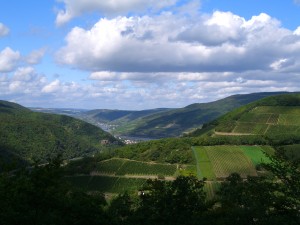 Seven euros each or no, we were getting off of that darned bus.
 “On the boat? But what about lunch in the typischer German restaurant?” But Herr Brahms had already disappeared into the trees, his hands clasped behind his back. He was indeed an accustomed hiker, moving deftly over the roots and twigs in his sock-less feet.
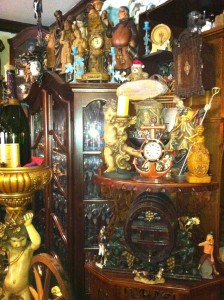
 Let’s just say that we wish we had joined Mr. Brahms on his hike, because, though the gondola ride was quiet and did indeed have lovely views, the restaurant was, shall we say, meant for people taking a tourist bus to get to a tourist boat ride on the Rhine – not for people like myself or Dave or Mr. Brahms. Then Corzoo pointed out to us that we were taking a tourist bus to get to a tourist boat ride on the Rhine River. I guess we couldn’t argue there. Corzoo managed to find delight in the kitschiness of it all and we did have some excellent laughs.
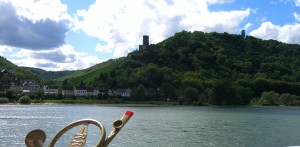 We passed castle after castle. Some were in ruins. Some had been made into hotels or youth hostels, others were now owned and occupied by people who made their homes there. While we were watching the scenery go by, Corzoo ventured to ask a question of our esteemed companion for the day.
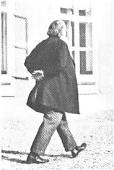 “Back where I belong,” he said, and without a trace of melancholy. He could see, though, that we were feeling melancholy at the thought of his departure from us. “However, you never know when I might drop in again.”
 One of the very first things one is sure to see upon entering the city is the castle, an imposing structure built on, not just a mere hill, but a craggy precipice of rock that stands high above the rest of the town. It is all crags and cliffs except for one main road called the Royal Mile, which stretches down in a straight line eastward from the castle and reaches the Palace of Holyroodhouse. The palace is the Queen’s residence when in Scotland, and has always been the preferred residence of the royals since it was built, since the castle was for protection and afforded them few comforts.
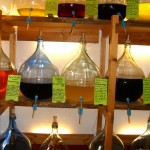 On our first afternoon, we wandered around the old part of the city, finding delightful shops – the world’s first liquid deli for instance. “What in the world is a liquid deli?” you might ask. Well, upon entering, you see large wooden casks and an array of clear vases with various colors of liquid in them. They contain oils, vinegars, liqueurs, and any other delight you can think of that might come in liquid form.
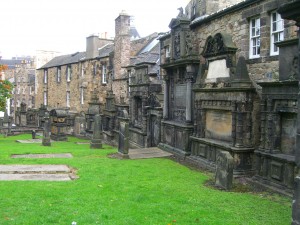 We wandered around the churchyard. If you can imagine the creepiest of Halloween movies you have seen with old, dark graveyards that harbor restless spirits and long-forgotten secrets – that is what Greyfriars kirkyard looks like! We found bars over some of the gravestones and wondered why in the world?
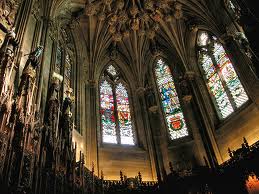 “Oooohhhhh!” cried Corzoo. “I was hoping I would get to see this chapel!”
 The next morning we visited the castle first thing. The views of the city from atop Castle Rock were impressive. We could see the entire city and beyond. It was very easy to see why one would choose the craggy rock for the castle location. We saw the crown jewels and the Stone of Destiny, which has been used in coronations for 1000 years. We went to the residential part of the castle called the Royal Palace where Mary Queen of Scots gave birth on June 19th, 1566 to James the VI of Scotland, who became James I of England. Upon seeing the accommodations, we understood immediately why the royals preferred Holyroodhouse as their residence. This was very barebones, indeed! We also visited the Great Hall, which displays brutal weapons of war – swords and spears and guns.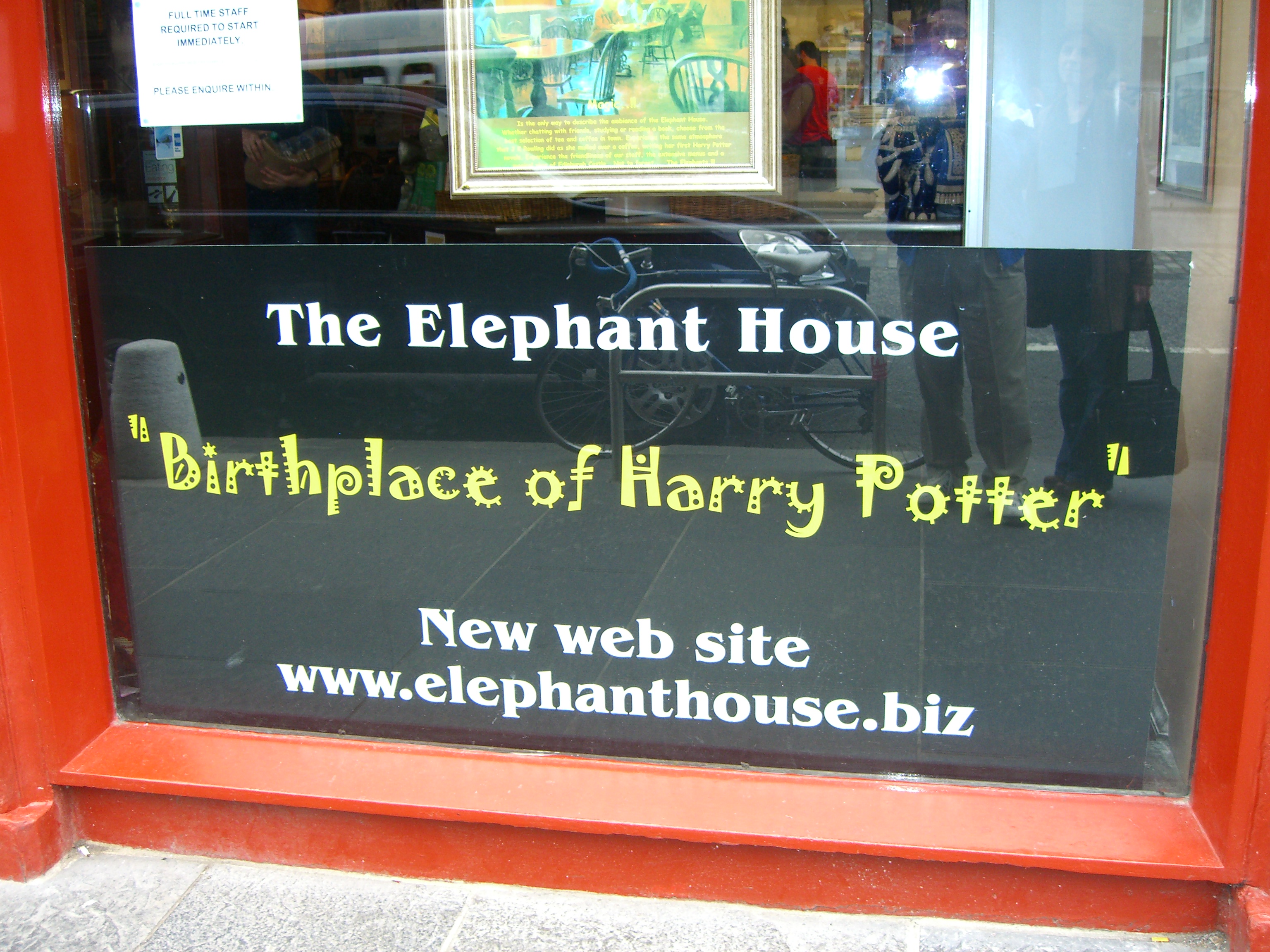
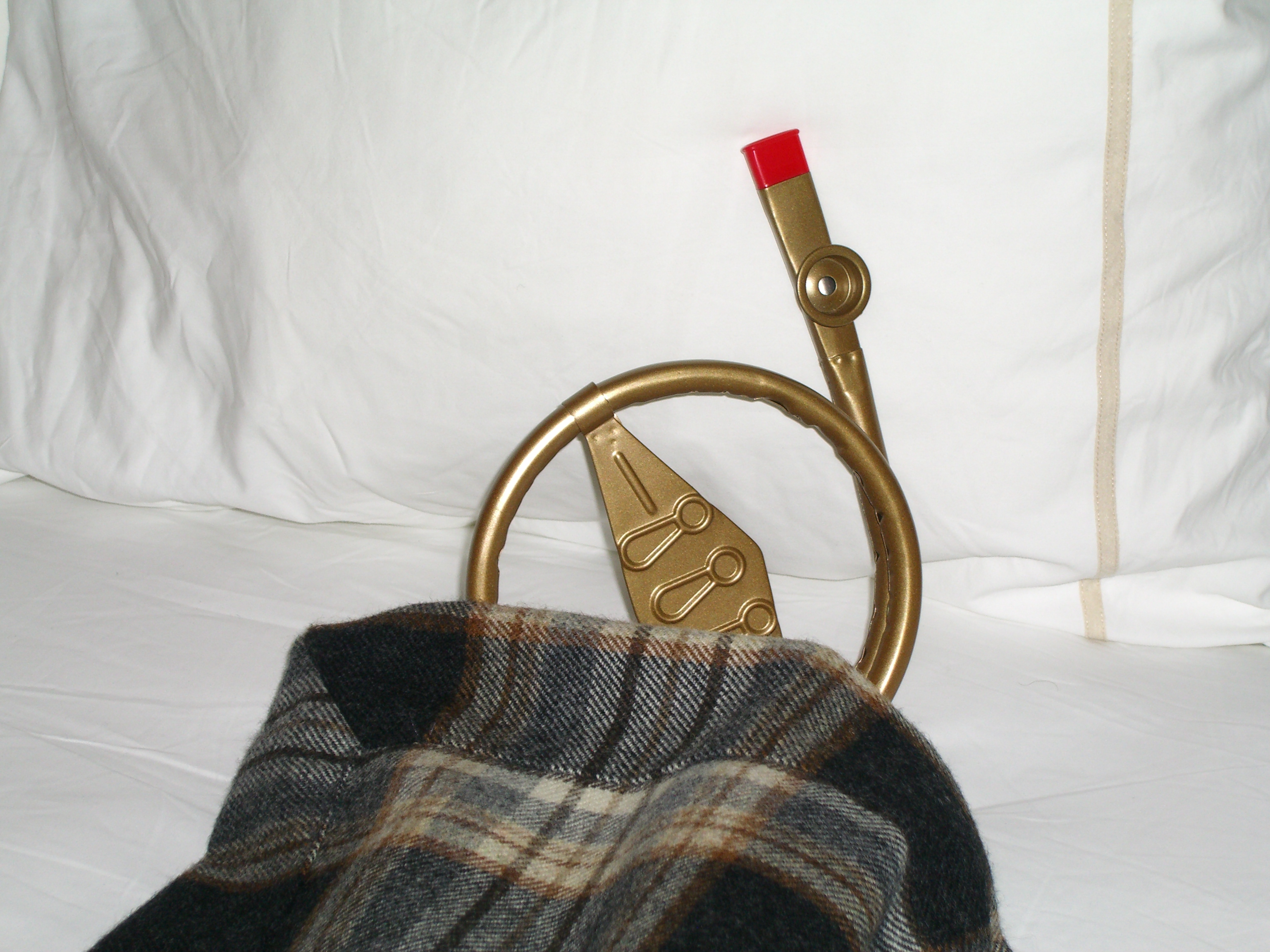
 We walked through the magnificent, ornate palace. It was everything that the royal residences at the castle was not. It was comfortable, elaborate, and extremely beautiful. But our favorite part came when we walked out of doors off to the side of the palace. There before us stood the ruins of the abbey that King David had originally built. The ruins were nothing less than poetic.
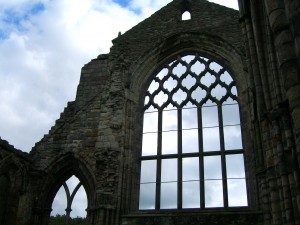 “Did you know,” said Corzoo, “that this is the place that gave Mendelssohn his inspiration for his third symphony, the Scottish Symphony?”
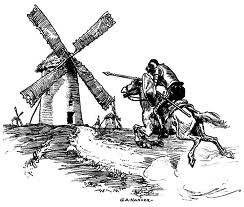 The reference to Don Quixote caused Corzoo to perk up a bit. Cervantes wrote many funny stories about the “ingenious gentleman” who wandered the country in search of adventures to prove himself a knight. He traveled on his skinny horse with his sidekick Sancho and declared the name of his lady-love before every “brave” act he committed. One of Corzoo’s favorite things was to listen to the very cheeky Strauss tone poem based on Don Quixote and his mis-adventures.
 “Well, speaking of seeing things better,” I continued, “shall we go for our walk up to Arthur’s Seat?” I pointed to the peak of the large hill in front of us. “It will be good exercise and we’ll have excellent views of the entire city and even farther than that!” We were feeling a bit out of shape from sitting on planes and buses, but we huffed and puffed our way up.
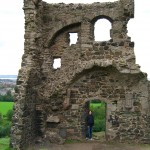 About a third of the way, we spotted more ruins. It was the ruins of St. Anthony’s Chapel overlooking St. Margaret’s Loch. Loch is the Scottish word for lake, Corzoo was sure to inform us. We inspected the ruins, and Dave pointed out the remnants of a fire someone had made in the corner of the ruins, and some ugly black graffiti people had left behind. It was apparently a favorite hang-out for many throughout the centuries.
 We walked on a gravel path most of the way, passing vast tangles of bushes and brambles and fields of thistles as well as gentle grassy knolls. Towards the top it got rockier and rockier. We were going to earn our view at the top! There were some moments where we had to be very careful with footing, walking along what was essentially a cliff with no barrier to keep from falling very far. But by keeping eyes fixed on where we were going rather than where we could have gone, we made it finally to the top. I helped Corzoo to get the best view possible of Castle Rock, the old part of the city, and as far as the Firth of Forth and beyond.
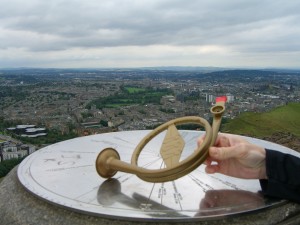 “I like it here,” said Corzoo. “Can we come back sometime and look around more?”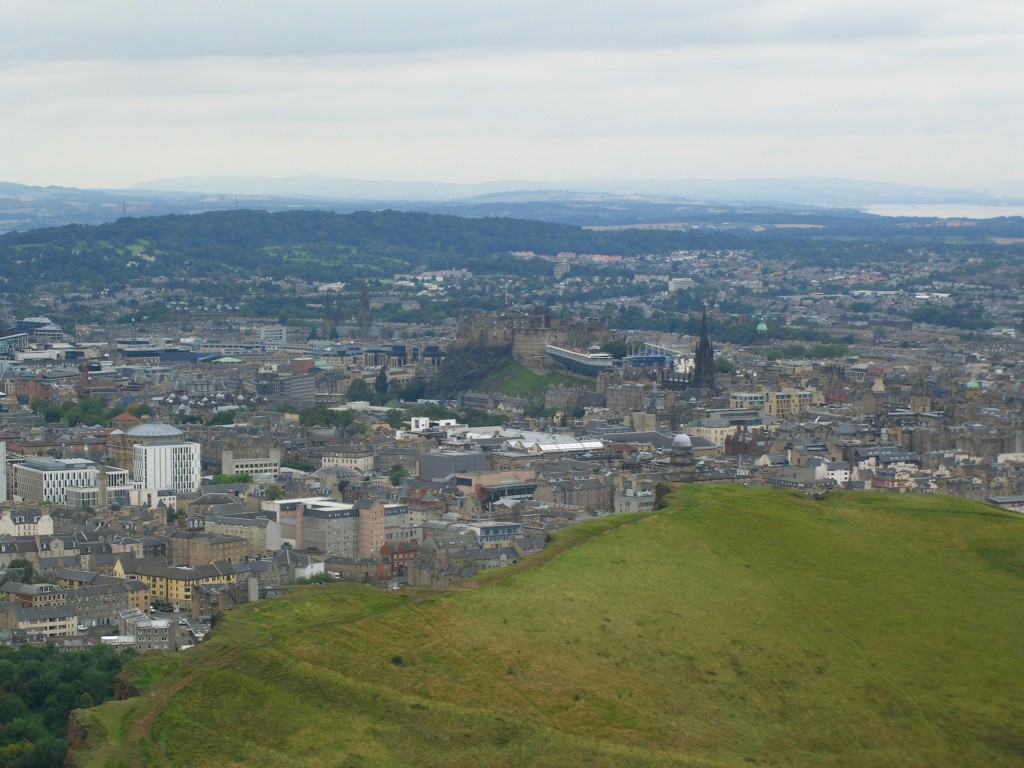
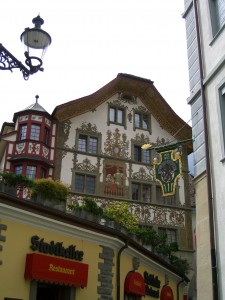 Our stay in Luzerne went by in a flash. What a shame, because it was a beautiful little town, with fresh, cool air, a mountain lake, and nice little shops. Our highlights were watching the swans on the lake and eating Eiskunst ice cream. “Das schmeckt mir gut!” as Corzoo would say. “Yummy!” as I would say.
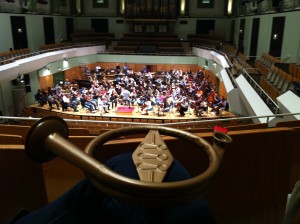 The next morning, the orchestra had a rehearsal at the hall and I thought perhaps today was a good day to go with Dave and listen to a little bit of rehearsal. Corzoo and I happily found an unused corner of the lobby and practiced for a little while, then looked around the inside of the hall. What a pretty space! And of course, it had its share of green embellishments. We listened to the orchestra rehearse Stravinsky’s Song of the Nightingale and heard some of Dave’s big solos. What a fun piece to listen to with all of the effects the various instruments make!
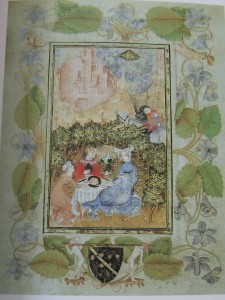 “In the Middle Ages, meaning from around the 5th century through the 15th century, monks would carefully copy out passages of the Bible or sometimes prayer books and other religious texts, but they would make them into works of art as well. They would often have elaborate illustrations, and they would always have a fancy first letter to begin each passage. Sometimes they would use pigments of real gold and other precious metals as their ink!”
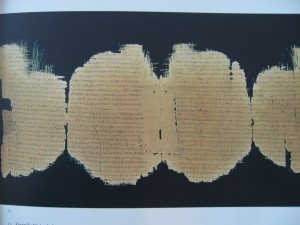 He also came to acquire some of the very oldest Christian texts known to exist. Passages from the Gospels – Matthew, Mark, Luke, and John – from as early as the year 150 A.D. and more from 200 A.D.”
 “And this is not the oldest thing he found,” continued our young friend. “He found pages of ancient Egyptian love poems written on papyrus. Do you know what papyrus is?” he asked.
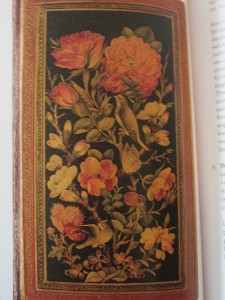 Book bindings! There was something I hadn’t thought of for a while. All the books I own are bound in such an ordinary way. Corzoo went on to tell us that Mr. Beatty retired to Ireland and opened up his collection to the public. He was later named the first honorary citizen of Ireland.
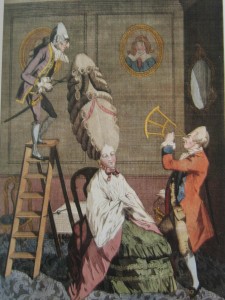 In addition to the spiritual texts were humorous prints of social satire. We all laughed.
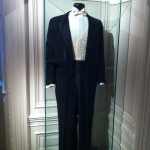 After Dave left for his rehearsal and concert, we ventured out to two places very close to our hotel. The first one was the Haus der Musik. We decided to focus on just one floor – the part that was the museum for the Vienna Philharmonic. We found three displays of very ordinary objects that especially delighted us: Mahler’s hat, items belonging to Brahms (glasses, pen, and calling card), and Leonard Bernstein’s tux!
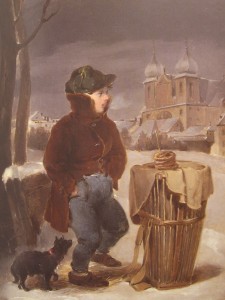 We saw a painting of a cold, poor boy selling pretzels on the street, accompanied by his dog. The placard beside the painting explained that there were many poor and vulnerable children alone in Vienna at that time, and there was a movement of painting whose goal was to bring to them and other social issues to the public eye.
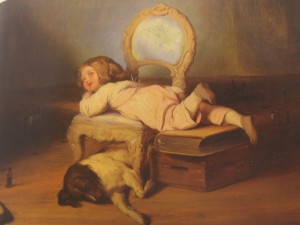 “Corzoo, is that how you see us adults? No spunk whatsoever?”
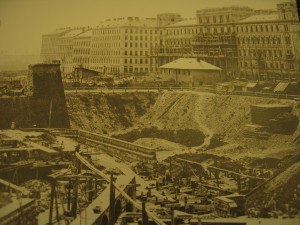 “Look at this photo, Corzoo!”
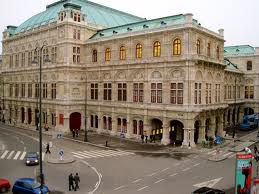 The Wiener Staatsoper (The Vienna State Opera) is one of the premier opera houses in the world. It is such a popular destination that there are tours in at least five languages that take place every hour! Frau Bilger and I sat in the lobby and observed everyone’s excited behavior in anticipation of the tour. Silly folks, young and old, were delighted with the grand opera costumes set up in the lobby that had face holes for snapping pictures to make it look like the person is wearing the costumes. Of course, I had no interest in such shenanigans. It helped to pass the time, though!
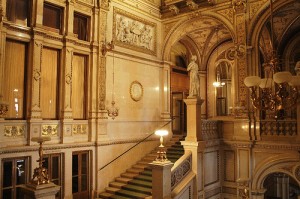 The opera house opened in 1869 with a performance of Mozart’s
 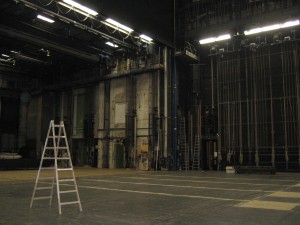 We went first backstage, which is three times the size of the area where the audience sits! Sets may be pre-assembled far backstage, underneath the stage, or even above the stage to later be moved into the scene taking place. There were no sets assembled because the opera season has not yet started; however, I believe there must be rehearsals starting somewhere because one lone baritone walked across the stage and let out a big, lusty vocal warm-up as he headed quickly to his destination somewhere in the bowels of the theater. I called after him from Frau Bilger’s bag with my Siegfried call and I was suddenly zipped inside – but not before I saw him look back with a look of amused surprise. “Ah! A young musician in the tour, eh? Sehr gut, sehr gut!” I was proud of myself for being so bold. They do have children’s operas. I shall have to see if there might be an occasion one day for me to take an audition for something like this. It’s always good to have ideas tucked away in the back of one’s mind.
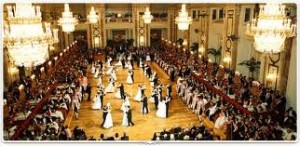 There is, however, plenty of opportunity to part with one’s money in enjoyment of the opera if one so chooses. For instance, there is the Wiener Opernball (The Vienna Opera Ball), which happens yearly. It is perhaps the grandest of balls in the world and showcases the orchestra, the singers, the choruses, and the dancers. A children’s ballet is a traditional part of the exhibition before the dancing starts. If a couple wants to be a part of the first dance, which of course is the Blue Danube by Johann Strauss (he is known as Der Walzerkönig – the King of the Waltz) they must go through a strenuous audition process, and the top couples have the honor of dancing. Then everyone is invited out on the floor to dance the evening away. It is an Event (with a Very Capital “E”) and full of over 100 years of tradition.
 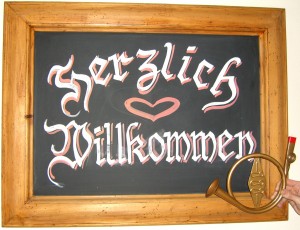 Herzlich Willkommen the sign said at our restaurant of choice the evening we arrived. Corzoo translated for us all, in case we weren’t sure what it said. A Heartfelt Welcome!
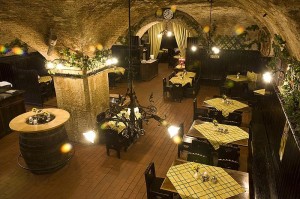 Corzoo had been eager to dash out the door of the hotel as soon as we arrived, ready to absorb everything about this city that oozed music even onto its street signs. However, when arriving in a hot city after many hours of travel, the first priority is to shower and have a little rest. Second on the list is to have a delicious meal, preferably a sampling of the local cuisine! That is exactly where we were headed. Down two levels beneath the street we went, into a restaurant of typical Austrian fare. It was a large, old wine cellar and a wonderfully cool respite from the heat of the streets above. We delighted in the atmosphere and, between the five of us in our little outing, we sampled the schnitzel, the goulash, the roast pork and the strudel.
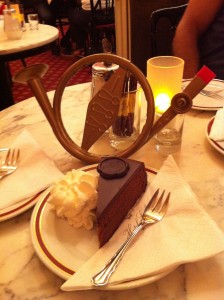 Satisfied to have experienced some traditional Austrian flavor, off we went to finish our meal at the Hotel Sacher with Sachertorte, a famous chocolate cake with a subtle apricot filling. A must-have in Vienna!
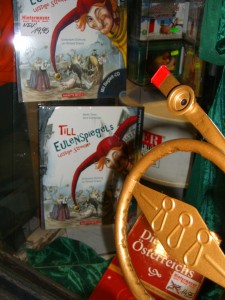 There, displayed in a window of a closed bookshop was a colorful book with a picture of a funny little prankster on it.
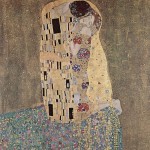 The following day was a free recovery day for the orchestra, so Dave was able to go out and about with us. We had never seen the works of Gustav Klimt at the Belvedere, so we made our way in the heat to the impressive grounds and palaces of this former residence of Prince Eugene of Savoy, a great military leader of his day.
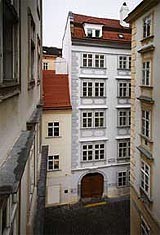 Later, we went on an evening walk with Corzoo to show him one of Mozart’s houses. I say ONE of Mozart’s houses, because he lived in many, many locations in Vienna. But this is where he lived for a longer period of time, and where he wrote the Marriage of Figaro. It was closed, but Corzoo was happy to see the narrow, modest street and lay eyes on the outside of the great master’s former abode.
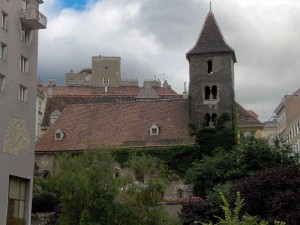 We then headed towards Ruprechtskirche, which is reportedly the oldest church in Vienna from perhaps as early as 800 A.D.! On the way there, Corzoo was reminding us of a potential pitfall of the German language. “Remember, you must distinguish between Ruprechtskirche and Ruprechtskirshe. We are going to St. Rupert’s Church, not St. Rupert’s Cherry!”